
The FCC robot vacuum ban is real, but it is narrower and stranger than the headlines suggest. On 28 July 2026, the Federal Communications Commission’s Public Safety and Homeland Security Bureau added “foreign-produced advanced robotic devices” to its Covered List — the register of equipment the US government has decided poses an unacceptable national security risk. Because of how the definition is written, ordinary robot vacuums are swept in alongside humanoid robots and robot dogs.
The action is Public Notice DA 26-786. It follows two National Security Determinations sent to the FCC on 27 July by a White House-convened interagency body, one covering robots and one covering connected power inverters. Both categories are now listed.
What the FCC robot vacuum ban actually blocks
This is not a recall and it is not a sales ban on what you already own. Under existing rules, equipment on the Covered List is prohibited from receiving an FCC equipment authorization, and an authorization is what a wireless device needs before it can legally be imported, marketed or sold in the United States. Applicants must now certify that their product is not covered equipment.
In practice that means new models. Devices that already hold a grant are not de-listed by this notice, and the FCC took a separate step the same day to keep them working. In Public Notice DA 26-789, the Commission’s Office of Engineering and Technology waived rules that would otherwise have blocked software changes to covered devices:
All advanced robotic devices and power inverters authorized for use in the United States may continue to receive software and firmware updates that mitigate harm to U.S. consumers at least until January 1, 2029.
— FCC Office of Engineering and Technology, Public Notice DA 26-789
That waiver covers updates that patch vulnerabilities and maintain compatibility with different operating systems. Without it, a “covered” robot vacuum in someone’s living room could have been cut off from security patches by the same rule meant to protect them.
The definition is why your vacuum counts
The determination defines an advanced robotic device as a mechanical mobile device — explicitly including autonomous mobile robots, humanoid robots and quadrupeds — that meets all of the following:
- Ground movement: capable of locomotion, obstacle avoidance, navigation or movement on the ground.
- Remote operation: operates at a distance from a human operator or supervisor, on commands or in response to sensor data.
- Weight: the combined weight of the device plus its ground station or docking station, if applicable, is over 4.4lbs (about 2kg).
- Sensing: contains a sensor capable of perceiving its environment.
- Connectivity: has wired or wireless networking — Bluetooth, Wi-Fi, cellular or satellite — at connection speeds of at least 200 kbps in either direction.
- Software control: runs software, firmware or AI/machine-learning model weights that control autonomous navigation, movement perception, data collection or remote command-and-control.
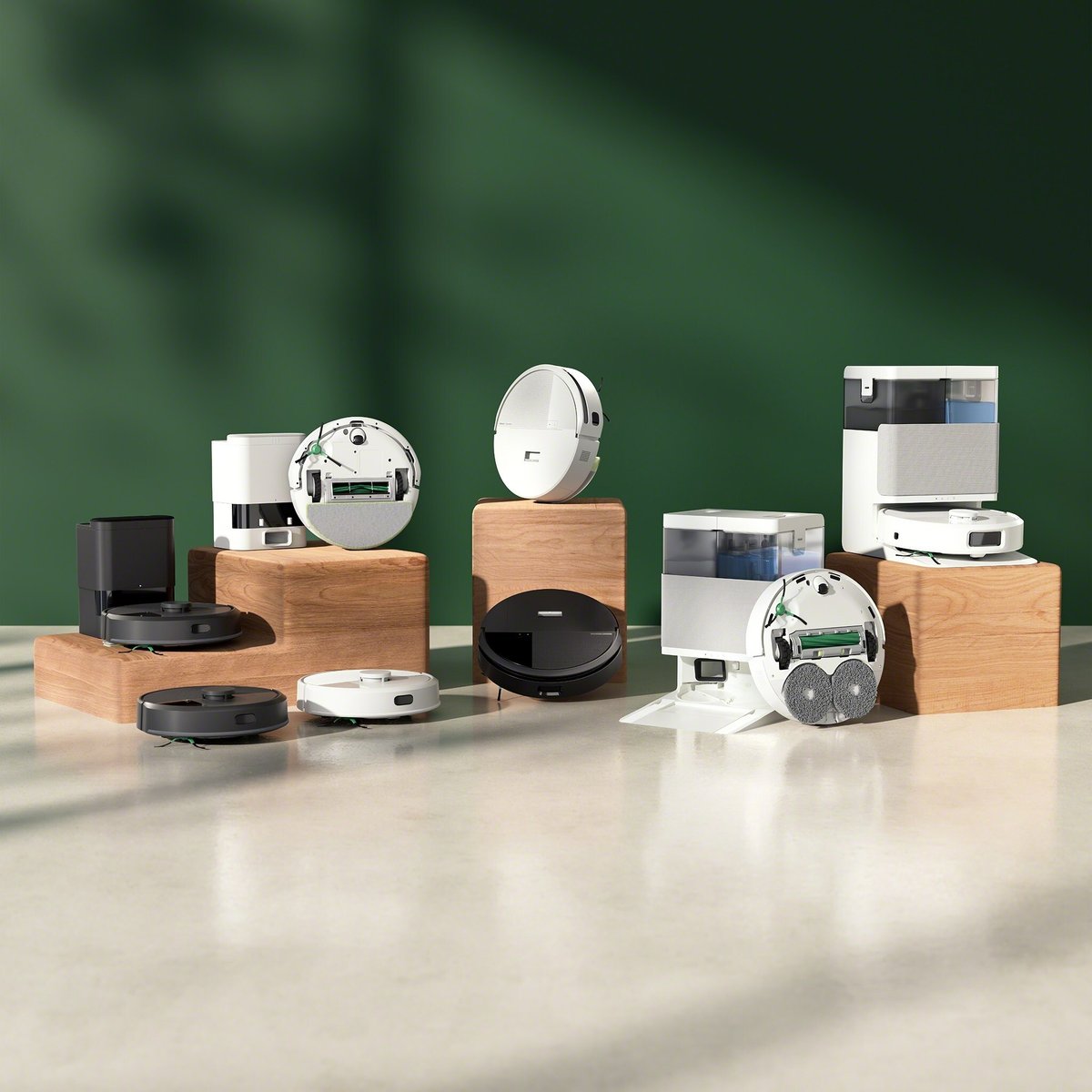
A mapping robot vacuum with a self-emptying dock ticks every box. So does a robot lawn mower. “Foreign-produced,” meanwhile, is defined by place of production rather than by company: it means anything that would not qualify as a “domestic end product” under US Buy American rules, so a US-headquartered brand assembling abroad is covered too.
What is exempt
- Connected vehicles as defined in US rules, at any gross weight, and vehicles operated only on a rail line.
- Uncrewed aircraft and uncrewed aircraft systems — these sit on the Covered List separately, added December 2025.
- Unmanned underwater vehicles able to operate without a human occupant.
- Medical devices under the US Food, Drug and Cosmetic Act, including surgical instruments and robotic systems, limb prostheses, and mobility aids such as canes, crutches, walkers and wheelchairs, powered or not.
- Fixed, non-mobile robots, including articulating, Cartesian/gantry and SCARA arms intended for industrial or medical use.
The route back in is a Conditional Approval: for robots, the Department of War can tell the FCC that a specific device or class of devices does not pose the risk, and the Covered List is then updated.
The security case, and the cost to buyers
The government’s reasoning is not imaginary. The determination points to a vulnerability found in early 2026 in a category of foreign-produced robots that let attackers remotely reach thousands of machines inside homes worldwide, with access to live camera feeds, microphone audio and detailed maps of people’s homes — and to a separately reported backdoor on robotic quadrupeds. Anyone who has read a robot vacuum’s privacy policy already knows these devices are rolling sensor platforms.
The remedy is the part worth arguing with. Listing an entire consumer category by place of manufacture, with the only exit being a national-security clearance process that buyers have no visibility into, does not make a single robot vacuum more secure. It narrows the shelf. The devices already in American homes — the ones with the camera and the floor map — keep operating, and the FCC had to issue a second notice just to make sure they keep getting patched. A rule that improves security for nobody currently at risk while removing future choice is a trade-off consumers were never asked about.
For Indian buyers, nothing changes today: this is a US equipment-authorisation rule and has no effect on what Roborock, Ecovacs, Dreame, Xiaomi or iRobot can sell here. It matters indirectly, because certification and product roadmaps are global, and a category shut out of the US market tends to see fewer new models everywhere. It is also the latest in a pattern — as with memory pricing, decisions taken far from India end up shaping what appears in Indian stores and at what price. Foreign-produced routers, worth noting, were added to the same Covered List back in March 2026.
Sources: FCC Public Notice DA 26-786, FCC Public Notice DA 26-789, FCC Covered List
