
Apple has announced a new Mac Studio built around the M5 Max and the all-new M5 Ultra, with India pricing starting at Rs 2,79,900 for the M5 Max model and Rs 6,29,900 for the M5 Ultra. Pre-orders opened on 25 August and machines start reaching customers on 22 September. It is the same compact aluminium box as before, but the entry price has moved up sharply, and Apple is pitching this generation almost entirely at people running large AI models on their own desk rather than in the cloud.
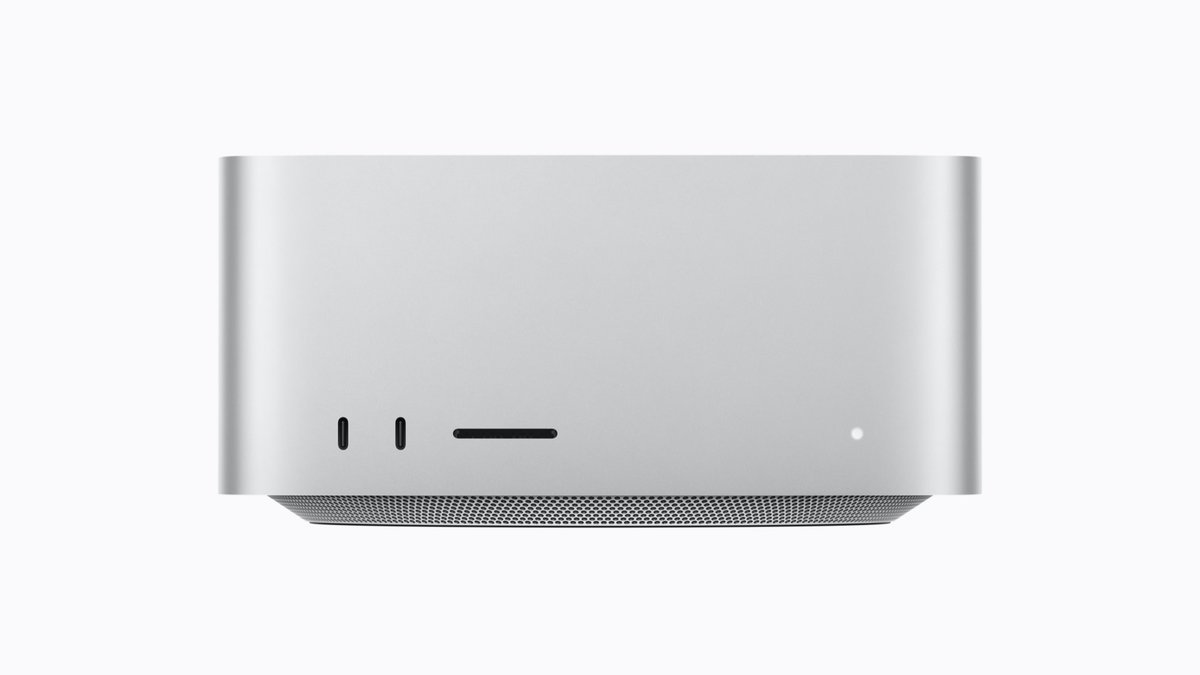
Mac Studio price in India and availability
Apple’s India press release lists two starting prices, and it is worth being precise about what each one actually buys, because the headline core counts in the announcement are ceilings you have to pay extra to reach.
- Mac Studio with M5 Max — Rs 2,79,900 (Rs 2,56,900 for education). This buys an 18-core CPU, a 32-core GPU, 36GB of unified memory and a 512GB SSD, with 460GB/s of memory bandwidth.
- Mac Studio with M5 Ultra — Rs 6,29,900 (Rs 5,84,900 for education). This buys a 30-core CPU, a 64-core GPU, 96GB of unified memory and a 1TB SSD.
The 40-core GPU and 614GB/s bandwidth Apple quotes for the M5 Max, and the 36-core CPU / 80-core GPU version of the M5 Ultra, are configure-to-order upgrades on top of those prices. The 512GB memory option is only offered on the top M5 Ultra chip, and Apple says that configuration does not ship until late October. Pre-orders are open now on apple.com/in/store and the Apple Store app.
On price: the previous Mac Studio launched in India in March 2025 at Rs 2,14,900, and that machine also started with 36GB of unified memory. Like for like on memory, then, the entry ticket has gone up by Rs 65,000 — roughly 30 percent — in about a year and a half. Apple’s India store no longer lists any M4 Max configuration, so there is no cheaper previous-generation model on Apple’s own India store to fall back on. Anyone who was waiting for this refresh to buy a Studio at the old price no longer has that option.
M5 Max: what changed
The M5 Max has an 18-core CPU split into 6 super cores and 12 performance cores. Apple says the up-to-40-core GPU, which now has Neural Accelerators built into every core, is up to 50 percent faster than the previous generation, and quotes up to 3.9x faster AI performance than M4 Max. Its other claimed figures against the M4 Max, all from Apple’s own July 2026 testing, include up to 3x faster Magic Mask in DaVinci Resolve Studio and up to 3.5x faster text-to-image generation.
- CPU: 18 cores — 6 super cores, 12 performance cores
- GPU: 32-core standard, up to 40-core configure-to-order, with third-generation hardware ray tracing
- Memory: 36GB standard; 48GB, 64GB or 128GB only on the 40-core GPU model
- Memory bandwidth: 460GB/s standard, 614GB/s on the 40-core GPU model
- Storage: 512GB SSD, configurable to 1TB, 2TB, 4TB or 8TB
- Front ports: two USB-C at up to 10Gbps plus an SDXC (UHS-II) slot
M5 Ultra: 512GB of memory, at a price
The M5 Ultra is the genuinely new part. Its GPU gets Neural Accelerators for the first time on an Ultra chip, which Apple says delivers up to 4.3x the peak AI compute of the M3 Ultra, alongside up to 1.3x higher multithreaded CPU performance and up to 1.8x faster graphics. Memory bandwidth is 1.2TB/s — 50 percent higher than before — on both the 64-core and 80-core GPU versions.
- CPU: 30 cores standard (10 super, 20 performance), up to 36 cores configure-to-order
- GPU: 64-core standard, up to 80-core, which Apple calls its most powerful Apple silicon GPU yet
- Memory: 96GB standard, configurable to 256GB, or 512GB only on the 36-core CPU / 80-core GPU model
- Storage: 1TB SSD, configurable to 2TB, 4TB, 8TB or 16TB
- Front ports: two Thunderbolt 5 ports at up to 120Gbps plus an SDXC slot — six Thunderbolt 5 ports in total, where the M5 Max has four
- Displays: up to eight external displays, against five on the M5 Max
“With the powerful M5 Max and the incredible capabilities of M5 Ultra, Mac Studio ushers in a new era of desktop computing, delivering huge performance gains for pro workloads and AI inference with frontier-class models.”
— Johny Srouji, Apple’s chief hardware officer
The on-device AI pitch, and what it really costs
Apple’s argument for this machine is that a large model can run entirely in your own unified memory — no prompts leaving the machine, and no metered token bill. That is a real and unusually consumer-friendly pitch, and it is one of the few cases where buying hardware genuinely does buy you privacy rather than a subscription.
The catch is the memory tier that makes it true. Frontier-class open-weight models are what justify the 256GB and 512GB options, and 512GB is restricted to the most expensive M5 Ultra build — and Apple says that configuration is not coming until late October. The Rs 6,29,900 entry Ultra ships with 96GB. The privacy benefit is genuine, but Apple is selling it at a configuration most buyers will not reach, then quoting it against the base price.
Ports, storage and connectivity
Both versions get four rear Thunderbolt 5 ports at up to 120Gbps, two USB-A ports at 5Gbps, HDMI 2.1, 10Gb Ethernet and a 3.5mm headphone jack. Storage moves to a PCIe Gen 6 SSD architecture that Apple says is up to twice as fast as before. Apple’s N1 chip brings Wi-Fi 7 and Bluetooth 6 to the Mac Studio for the first time, and the machine now supports genlock over USB-C for syncing a display with professional camera capture. Thunderbolt 5 with RDMA also lets multiple Mac Studio units be clustered; Apple claims four of them together run AI inference up to 3x faster than one.
Software, and the India caveat
Apple pairs the launch with macOS 27 “Golden Gate” and its Siri AI features. macOS 27 is in public beta now and Apple says it will arrive as a free update this autumn; Apple has not stated which macOS version ships preinstalled on 22 September. As with the new Mac mini announced the same day, Apple Intelligence’s supported-language list still includes no Indian language, so a chunk of what this hardware is being marketed on will not apply to Indian-language users at launch.
If you are buying, the sensible move is to wait for independent benchmarks rather than Apple’s own comparison figures, and to price the configure-to-order upgrades before deciding — on this machine, the difference between the advertised price and the specification Apple actually talks about is substantial.
Source: Apple
