
If you have priced a RAM upgrade or a new laptop lately and walked away stunned, you are not imagining it. RAM prices in India in 2026 have climbed sharply, and so have laptop and desktop prices along with them. This is not the usual festive-season swing or a passing supply hiccup that fixes itself in a month. It is a structural squeeze, driven by where the world’s memory factories have decided to point their production, and it changes the simple question every buyer is asking right now: should I buy now, or wait?
Why RAM and laptop prices are actually rising
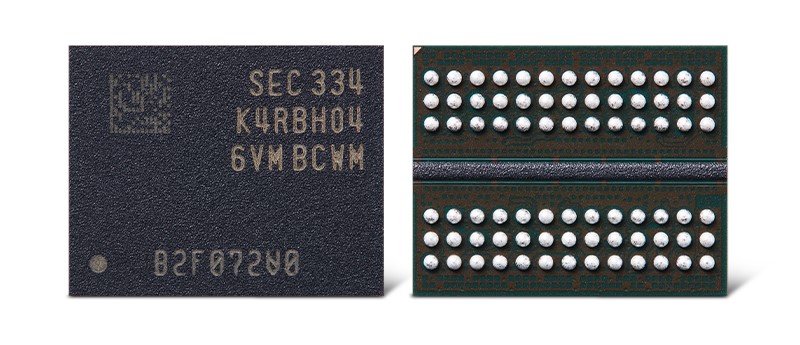
The root cause is AI. The three companies that make most of the world’s memory — Samsung, SK Hynix and Micron — have shifted a large share of their wafer capacity toward High Bandwidth Memory (HBM), the specialised, expensive memory that AI data centers buy by the truckload. AI and data-center customers pay far more per wafer than the consumer market does for ordinary DDR5 RAM and NAND flash. So the manufacturers are doing exactly what you would expect a business to do: they are selling their limited production to whoever pays the most. That leaves less capacity for the memory that goes into your laptop, your desktop, and the RAM kit you were about to add to your PC.
This is a deliberate reallocation, not a temporary glitch, and the memory makers are candid about it. In Micron’s fiscal Q3 2026 earnings report, CEO Sanjay Mehrotra set out a timeline that should reset expectations for anyone hoping this blows over quickly:
We expect tight conditions to persist beyond calendar 2027 as a result of AI-driven demand across all segments coupled with structural supply constraints. Even as we expect industry supply to improve gradually in 2028, we currently do not have line of sight as to when memory supply will be able to catch up with increasing demand.
There is a blunter real-world signal too. In December 2025, Micron announced it is exiting its consumer-facing “Crucial” memory and SSD retail brand entirely, with shipments ending in February 2026, so it can redirect that supply to larger AI and data-center customers. When a major manufacturer walks away from the consumer aisle to serve AI buyers, that tells you where consumer prices are headed.
How much RAM prices in India have moved in 2026
Globally, the research firm IDC has laid out how this filters down to what shoppers pay. In its moderate scenario, PC average selling prices could rise 4-6% and shipments could contract 4.9% in 2026 — worse than IDC’s own November 2025 forecast of a 2.4% decline. In its pessimistic scenario, PC prices could rise 6-8% and shipments could fall 8.9%. IDC also notes that Lenovo, Dell, HP, Acer and Asus have all warned of tougher conditions ahead, and points to industry-wide price hikes of roughly 15-20% as brands reset their component contracts.
For India specifically, the numbers as of March 2026 were already stark. In reporting published by Storyboard18 on March 11, 2026, IDC India analyst Bharath Shenoy said:
These pricing pressures could persist for six to seven quarters, with relief potentially arriving only in the second half of 2027.
The same March report noted that laptops once priced around ₹30,000-35,000 had already moved closer to ₹45,000, and that DDR5 RAM prices had risen roughly 2.5 to 3 times since early 2025. Separately, Kailash Lakhyani, founder-chairman of the All India Mobile Retailers Association (AIMRA), said laptop prices have been rising every month since November 2025, citing memory costs, currency volatility, inflation and geopolitical tensions as contributing factors.
The demand context makes the timing painful. India shipped a record 15.9 million PCs in 2025 — up 10.2% year-on-year and the first time the market crossed 15 million units — but IDC expects Indian PC shipments to decline roughly 7-8% in 2026 as higher prices dampen demand.
A live snapshot you can go verify
To make it concrete, here is what DDR5 RAM looks like on Indian shelves today (checked on Flipkart and Amazon.in on July 22, 2026 — treat this as an illustrative snapshot, not a fixed price, because listings swing wildly by brand, speed and kit type). Budget-tier 32GB DDR5 kits, such as EVM-branded ones, are listed around ₹14,000-17,500, while premium branded kits like Crucial run ₹40,000-48,500 for similar capacity. For reference, a 32GB DDR5 kit cost roughly ₹6,000-7,000 in early 2025 per the same India reporting chain — so even the cheapest options today are a multiple of what they were. Go check the current listings yourself before you buy; the point is that DDR5 is expensive across the entire range right now.
When might it end?
Here is where you have to be careful about which data is most current. The India figures and the “six to seven quarters, relief in the second half of 2027” framing come from March 2026 — that was the trajectory then. Micron’s guidance is more recent, from its fiscal Q3 2026 earnings (mid-2026), and it points to an even longer tail: tight conditions beyond calendar 2027, with only gradual supply improvement in 2028 and no clear line of sight on when supply catches up with demand. In other words, the more recent the data, the longer the squeeze looks. Nobody credible is promising a snap-back to 2024 prices any time soon.
Should you buy now or wait?
You will see plenty of retail-driven “buy now before it’s too late” messaging around this story. Ignore the panic. The honest reading of the evidence is more useful than the urgency: because Micron’s own CEO says conditions stay tight through at least 2027 with only gradual relief in 2028, “just wait a few months and it’ll get cheaper” is not obviously good advice — but that is not the same as a reason to panic-buy either. Both the fear pitch and the false comfort are wrong.
What actually helps:
- Buy only if you genuinely need it now. If your machine is dying or you can’t do your work, buy — the price isn’t going to reward you for waiting. If it’s a nice-to-have, there’s no strong evidence a few more months of waiting helps, and no need to rush either.
- Buy the RAM capacity you’ll need for the life of the machine. The old strategy of buying 8GB or 16GB now and “adding more later” is a trap in this market — later will likely be more expensive, not less. If you can stretch to 32GB up front and you’ll use it, do that now rather than betting on a cheap top-up down the road.
- Don’t let a supply squeeze get converted into a fear-driven sale. Artificial countdown timers and “prices rising tomorrow” banners are marketing, not forecasting. Compare across Flipkart, Amazon.in and the brand’s own store, and check the spec (speed, kit configuration) rather than just the capacity number.
There is one alternative worth a specific mention for gamers. If the main reason you were eyeing an upgrade is gaming — a pricier GPU plus more RAM — cloud gaming lets you sidestep the hardware spike entirely by running the game on someone else’s server. We covered the economics of that in detail when GeForce NOW’s India launch went live for everyone; for players who don’t want to sink money into an increasingly expensive rig right now, it is a legitimate option rather than a forced plug.
The bottom line: this is a real, structural price increase with no clean end date, so make the decision on your actual need — not on a marketing countdown, and not on the hope that prices quietly fall back next quarter.
Sources: Micron fiscal Q3 2026 earnings report, IDC, Storyboard18
