
Meta has launched Muse, a personal AI agent that can read your email, book travel, fill out forms, and check out with your saved card through Link by Stripe. Meta announced Muse on September 8, 2026. It is rolling out first in the United States on iOS, Android, and the web at muse.ai. Support for Meta’s AI glasses is coming later.
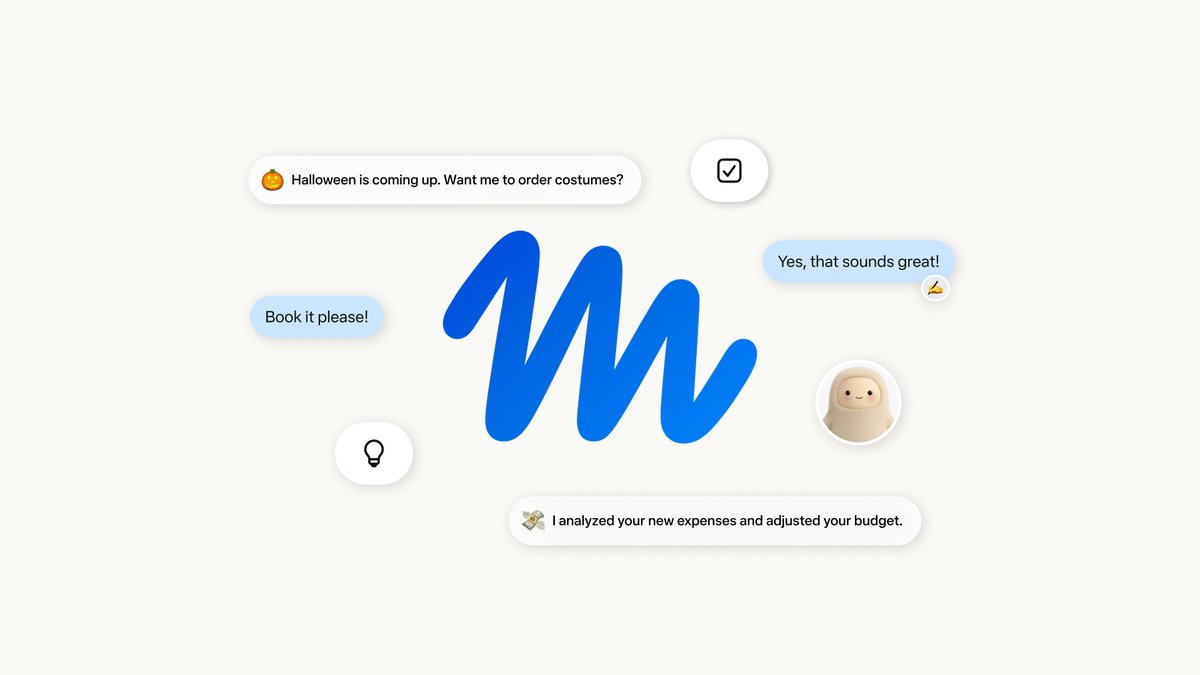
Unlike a chatbot that answers questions when asked, Muse is built to act on its own and keep working after you close the app. Meta says it can negotiate bills, plan a trip end to end, turn a saved Instagram recipe into a shopping list, and send party invitations without you repeating the same request each time.
What Meta Muse can actually do
- Task execution: books travel, fills out forms, drafts and sends emails, and checks out purchases through Link by Stripe.
- Ongoing planning: builds and updates personalized plans toward goals you set, and can act unprompted based on what it learns from your conversations.
- Connected accounts: links to email, calendars, payment methods, health and smart home apps, and shopping, dining, and events platforms. You approve each connection one at a time rather than granting blanket access up front.
How Meta says it keeps Muse secure
Every user gets a separate cloud computer called a Muse Secure VM, where the agent and its connected data live. A second system called Sentinel runs on the same machine but stays walled off from Muse itself. It checks everything that tries to leave that VM, and unfamiliar actions trigger an approval prompt before Muse can proceed. Meta says this means Muse cannot see your stored passwords or payment details directly, and that it does not share your conversations or VM data with Meta’s ad-targeting systems.
Vishal Shah, Meta’s VP of AI Products, told Fox Business the company delayed the original release in April to make it more secure. He was candid about the limits of that work: “It is impossible to say that there is never going to be a mistake, but every single part of the architecture has been designed to make this as safe, as secure, as private as we can possibly make it.”
Pricing
Muse is free for most everyday use, up to 100 million tokens a week per user. Two paid plans unlock heavier use: Power at $20 a month and Maximum at $100 a month. Meta says most people will stay on the free tier, and the app shows a usage meter so you can track what’s left before you’re asked to subscribe.
A token cap is not a unit most people can reason about before they start. A hundred million tokens a week sounds generous, but nothing in Meta’s announcement tells you what a single booked flight or a week of email drafting actually costs against that number. You are being asked to connect your inbox and your card before you can find out.
Why this is a bigger ask than it looks
Handing one app your email, your calendar, and your payment method is real convenience. It is also real exposure. Meta is doing this weeks after agreeing to pay $18 billion to settle a multistate lawsuit over social media’s harms to children, and years after a $5 billion FTC settlement in 2019 over separate privacy violations. None of that proves Muse itself is unsafe. But it is the reason Meta’s promise of a future where Meta itself cannot read your Muse data matters more here than it would for most companies. That promise depends on the planned Confidential VM, which encrypts your data with a key only you hold. Until that update ships, Meta’s current Secure VM design does not clear that bar yet.
Meta’s announcement lists a US-only rollout for now, with no India timeline stated. Readers here can watch how the security claims hold up under outside scrutiny before Muse reaches other markets. For a sense of how other AI vendors have handled trust and transparency, see our coverage of Claude’s approach to watermarking AI-generated content.
Sources: Meta Newsroom, TechCrunch, Fox Business
